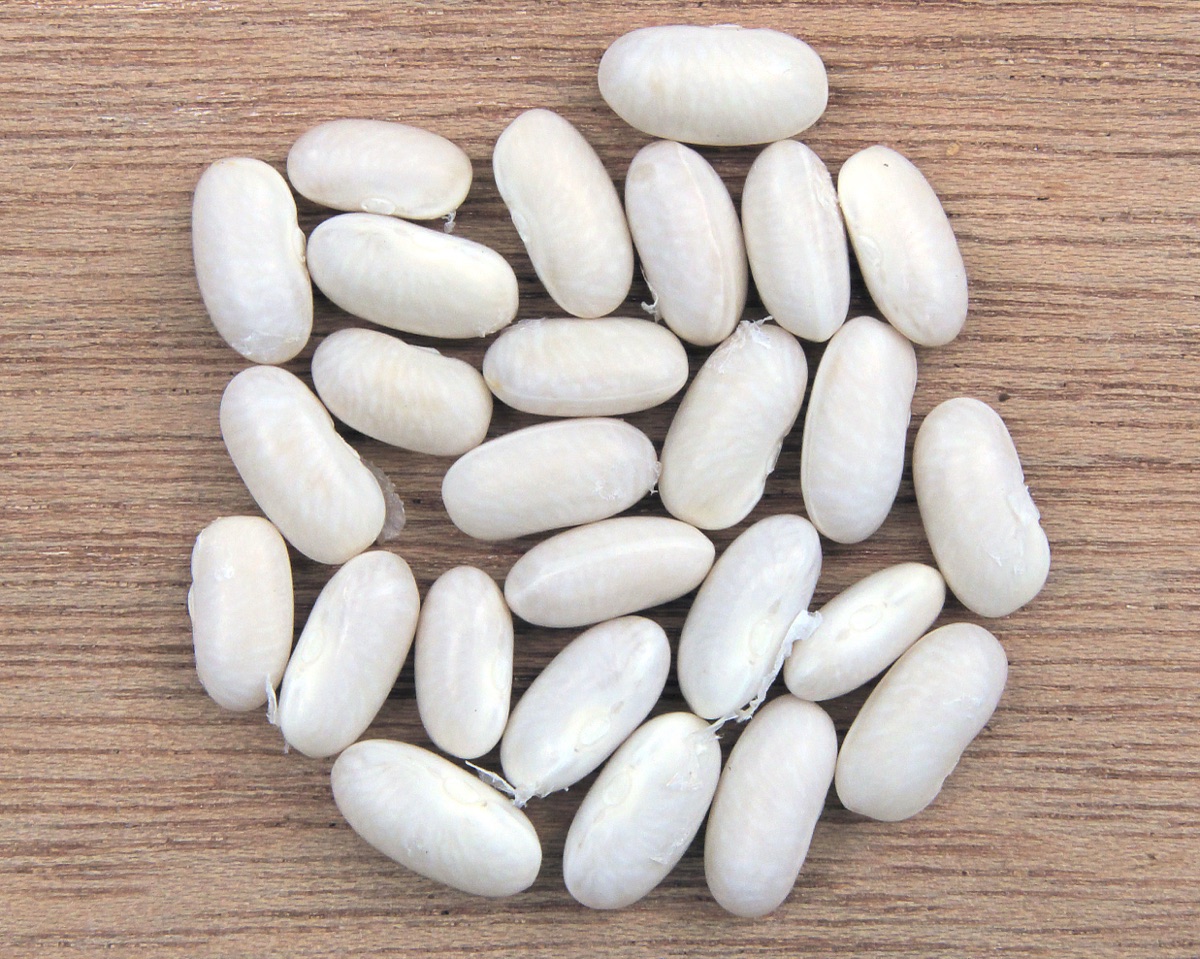
White beans include several commercial classes of dry beans with pale seed coats. Although they share a light appearance and a mild flavour, they are not a single uniform product. Differences in seed size, shape and cooked texture influence how they are used in kitchens and food manufacturing. Selecting a named class helps match the beans to the finished dish or process.
White-bean varieties
Navy beans are generally small and oval, Great Northern beans are medium-sized, and cannellini are larger with a kidney-like shape. These distinctions affect presentation, particularly in salads and dishes where whole beans remain visible. Uniform size, intact skins and limited staining are useful quality characteristics. Cooking performance should be considered alongside appearance, especially when the beans must retain their shape.
Food uses
White beans are used in soups, tomato-based stews, salads, baked bean dishes and canned foods. Their mild taste also suits purees and spreads in which herbs, spices or other ingredients provide the main seasoning. Whole-bean recipes emphasise an even, tender texture with recognisable grains, while blended preparations favour smoothness. The chosen class should suit the recipe and preparation method.
Packing and storage
White beans are commonly packed in food-grade bags that protect them during handling and transport. A dry, clean storage environment helps limit moisture exposure and deterioration of appearance. Keep packages off the floor, inspect for damage and maintain pest control. Separate named bean classes and retain their lot labels so products with different sizes and cooking characteristics remain clearly identifiable.
Common product questions
Are navy, Great Northern and cannellini beans the same?
They belong to different white-bean market classes. Navy beans are generally small, Great Northern medium-sized, and cannellini larger and kidney-shaped. Naming the class helps match the product to its intended presentation.
Can white beans be used in smooth purees?
Yes. Their mild flavour suits purees, dips and spreads combined with herbs or other seasonings. For these preparations, consistent softening and a smooth final texture are more useful criteria than keeping individual beans intact.
Which characteristics matter for canned whole beans?
Whole-bean integrity, size uniformity and texture after the intended process are relevant. A bean that looks suitable when dry may behave differently after processing, so a representative canning trial helps assess the result.
Technical reference
Reference analysis
The table provides reference quality criteria for the named pulse prepared for direct human consumption. The applicable moisture ceiling depends on climate, storage duration and whether the seed coat has been removed.
Reading the values
≤ Maximum · ≥ Minimum
A dash between two values indicates a range.
Reference analysis
Whole white beans — reference quality limits
Phaseolus vulgaris
Whole, seed-coated product. Both moisture options are shown; choose the applicable option rather than treating the higher figure as suitable for every shipment.
Whole white beans — reference quality limits — Phaseolus vulgaris
Parameter
Reference value
Unit
Moisture — tropical climate or long storageLong storage: more than one crop year.
≤ 15
% m/m
Moisture — moderate climate or short storage
≤ 19
% m/m
Total extraneous matter
≤ 1.00
% m/m
Mineral matterIncluded in total extraneous matter.
≤ 0.25
% m/m
Impurities of animal originIncluded in total extraneous matter.
≤ 0.10
% m/m
These are published reference values for the named grade or product. The agreed order specification and the mill or batch certificate of analysis determine the supplied material.
02 / Specification guide
Define your requirement.
These are the details to provide, not a fixed offered specification.
White-bean class
Navy, Great Northern, cannellini or another named class; no unspecified substitution.
Size & shape
Seed count or sieve range, shape and uniformity matched to the intended dish or process.
Colour & integrity
Whiteness reference, stained seeds, cracked skins, splits and foreign material.
Moisture & cooking trial
Moisture maximum and cooking or canning trial requirements, if relevant.
Origin & crop year
Country of origin, harvest year and lot identity; agree a representative sample.
Packing & delivery
Food-grade bag format, net weight, total quantity, destination and delivery window.
03 / Documents to request
Make the brief complete.
State which documents and approvals are required. Availability and scope are confirmed for each enquiry.
01
Lot-linked inspection report covering agreed moisture, size and defect limits.
02
Origin, crop year, packing list and batch traceability records.
03
Phytosanitary and other destination documents where required.
04
Agreed pesticide-residue and contaminant test reports, where applicable.